David with the Head of Goliath as Magnum Opus – The Alchemy of Light and Matter
The foundation of this study lies in the collective achievements of the most eminent Italian researchers of Caravaggio’s oeuvre and painting technique, whose numerous publications have contributed to the systematisation of knowledge regarding the Master. Within this distinguished group, a particular place is occupied by Dr Roberta Lapucci, whose acute research intuition was the first to indicate that the painting presented here, David with the Head of Goliath, can be attributed with a very high degree of probability to the painter Michelangelo Merisi, known as Caravaggio. It is thanks to her initiative, and the titanic labour of the team of specialists she assembled, that we are able today to present these groundbreaking conclusions and the evidence that clearly points to his authorship.
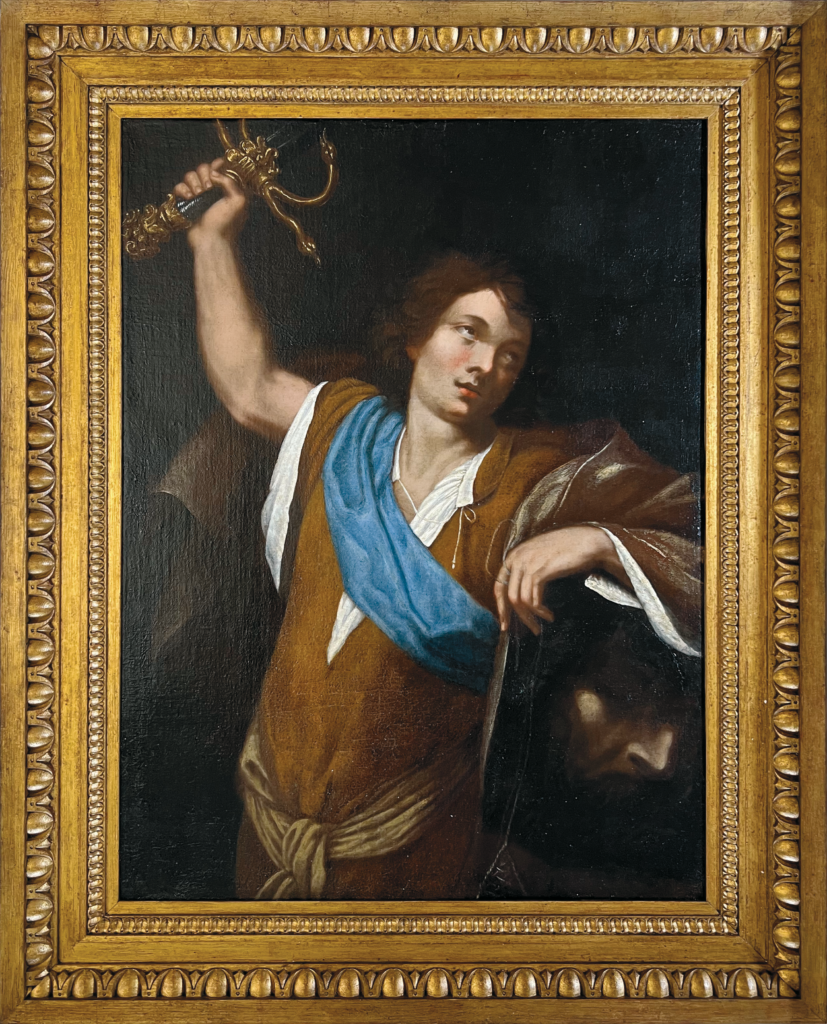
This report was constructed in stages, the fruit of the coordinated collaboration of an international body of scientists and specialists in the fields of conservation, diagnostics, data interpretation, and historical research. The principal author of this study is Dr Roberta Lapucci.
We are, therefore, honoured to present the results of our research work initiated in September 2019, the findings and profound conclusions of which have exceeded the boldest expectations of all project participants.
Thanks to spot XRF analyses conducted by Dr Leonardo Borgioli and the stratigraphic analysis of paint layers performed by Dr Mirella Baldan, a unique chemical profile has been detected. This profile appears exclusively in works created between 1595 and 1601, during the period when Caravaggio resided at Palazzo Madama under the protection of Cardinal Francesco Maria del Monte. This profile irrevocably disappears from the artist’s oeuvre following his flight from Rome and the loss of access to the Cardinal’s laboratory. The identified profile defines the „early Caravaggio” and proves that the painting was created within a narrow time window when the artist had access to luxurious materials, largely produced on-site at Palazzo Madama. Due to this access, Caravaggio was not yet compelled to employ the Neapolitan material expedients characteristic of his later period, when he lost contact with the laboratory and his patron.
The confirmed chemical composition of the painting is so specific that it indicates its creation in close collaboration with the Cardinal during the years 1595–1601. This unique chemical signature acts within it like a technological fingerprint, confirming that we are dealing with an original from the brush of Caravaggio, rather than an imitation. Followers and copyists simply did not have access to such an advanced laboratory, nor did they demonstrate a propensity for experimentation on such a vast scale.
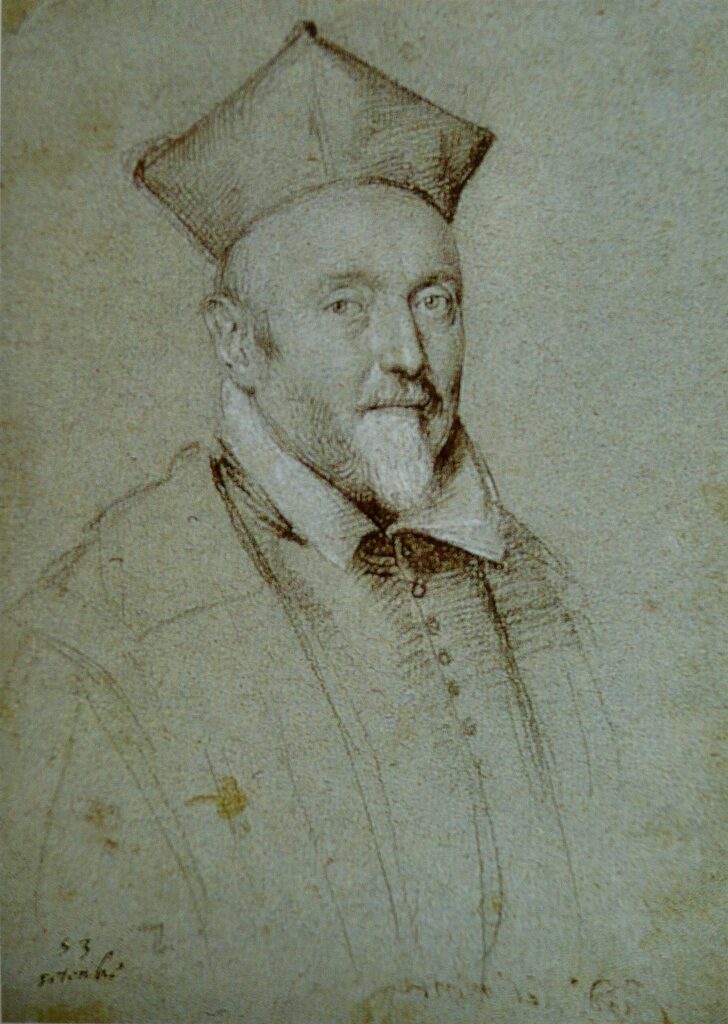
The key to understanding the technology of this work is the figure of Cardinal Francesco del Monte himself. Discerning the budding genius of the painter and his propensity for experimentation, the Cardinal invited him to Palazzo Madama, offering shelter and patronage. It must be remembered that Del Monte was, at that time in Rome, a recognised authority in the fields of chemistry and alchemy.
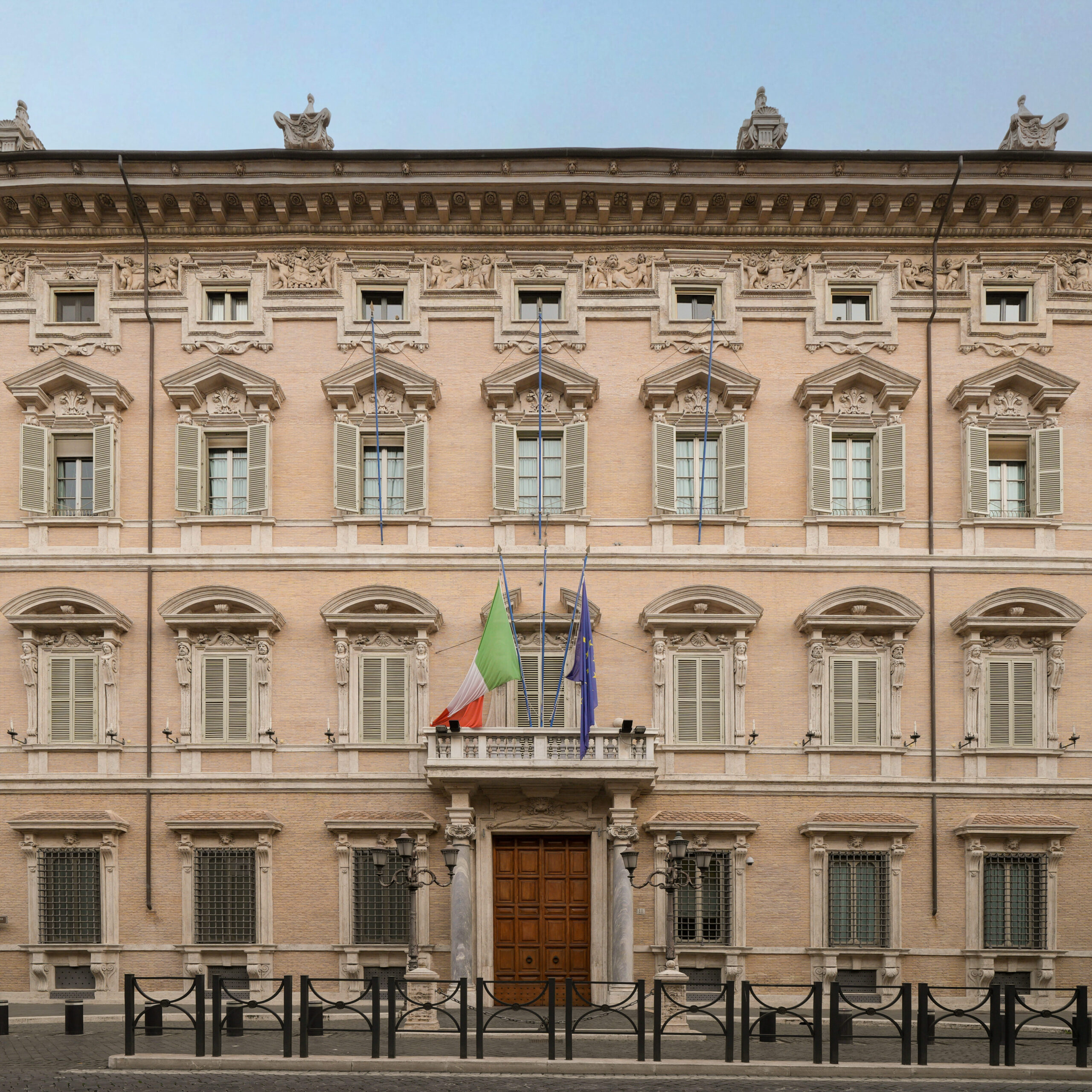
We have before us, therefore, a painting that aligns perfectly with the current of the most advanced material research of that era, altering our perception of Caravaggio: from an instinctive painter to a painter-experimenter. Del Monte’s laboratory at Palazzo Madama became an incubator of realism. Both the Cardinal and the artist strove to create an art that was true and almost scientific, rejecting idealisation.
According to Bellori, it was there that Caravaggio coined his famous dictum:
“When I do not have nature before my eyes, I cannot paint a single brushstroke.”
His contemporary, Karel van Mander, cites Caravaggio’s words in a similar tone:
“…all things are nothing but bagatelles, child’s play, or trifles, unless they are done from nature, and that there can be nothing better than to follow Nature…”
Following the initial diagnostic discoveries regarding the painting, and recognising the calibre of the work under examination, we decided to designate this project and the painting itself as Magnum Opus. This term resonates perfectly with the themes of Cardinal Del Monte’s pursuits and Caravaggio’s painting during this specific period of his creativity.
For Del Monte, a member of the ecclesiastical and intellectual elite, the Magnum Opus was a metaphor for the soul, which must pass through the darkness of sin and suffering (Nigredo) to reach the divine light (Albedo), emerging from the gloom like the beam of a spotlight. For the Cardinal, the Great Work was not a search for a nugget of gold, but a technology for the synthesis of the absolute. That is why Caravaggio’s paintings from this period are so unique – they are the only objects in the world wherein the alchemical quest for the Great Work concluded with success not in a crucible, but on canvas. Caravaggio was not a chemist, but he became the „eyes” of the Cardinal, who, through experiments, sought to reach the prima materia – the primordial matter that builds the universe.
As we shall demonstrate in the further sections of this report, the painting David with the Head of Goliath contains within it the sum of the achievements of an extraordinary trio: Francesco del Monte (alchemy), Guidobaldo del Monte (creator of perspective and optical instruments), and Caravaggio as the painter. It was precisely this technological and artistic symbiosis that transformed the painting into a work so exceptional and immortal.
We invite you to read on.
